

Overhead cranesare designed to move and position heavy loads in industrial facilities. Businesses can choose single-girder or double-girder models according to their operational requirements.
Single-girder overhead cranes are suited to lighter loads. Their suitability for smaller and narrower spaces, cost effectiveness and straightforward operation make them a common choice. They offer energy efficiency and reduced maintenance requirements.
Double-girder overhead cranes are suited to loads considerably heavier than those handled by single-girder models. They support large industrial operations and can work effectively in facilities with extensive working areas.
Both models meet durability and safety standards and feature advanced controls for positioning materials accurately. Height configurations can be adapted to different operational needs.
Overhead cranes help improve occupational safety and operational efficiency. They save time by accelerating material transport and positioning, supporting increased overall production capacity.
Single-girder and double-girder overhead cranes provide effective load handling solutions for industrial facilities. Their cost effectiveness and operational efficiency make them an investment in workplace production and productivity.
Differences Between Single-Girder and Double-Girder Overhead Cranes
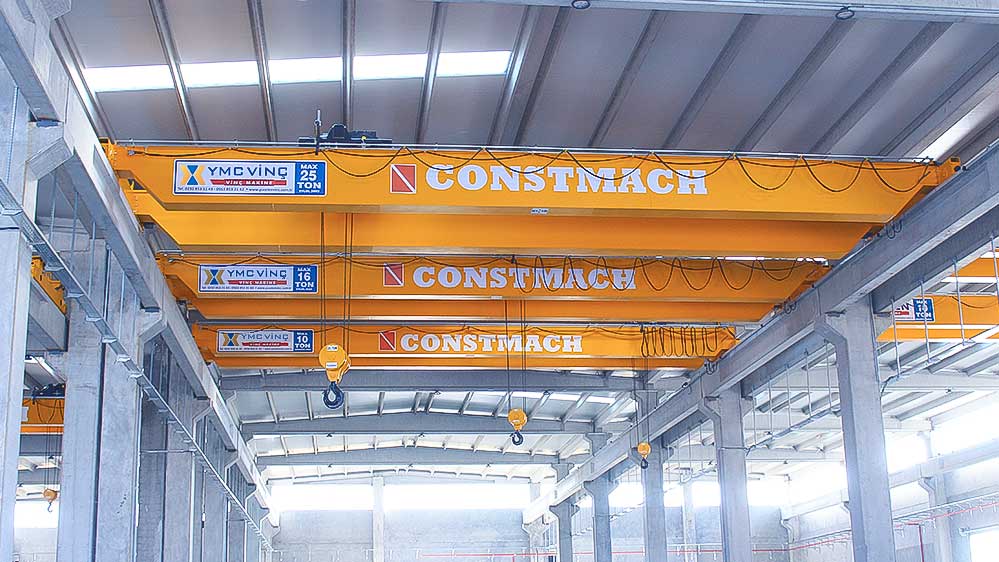
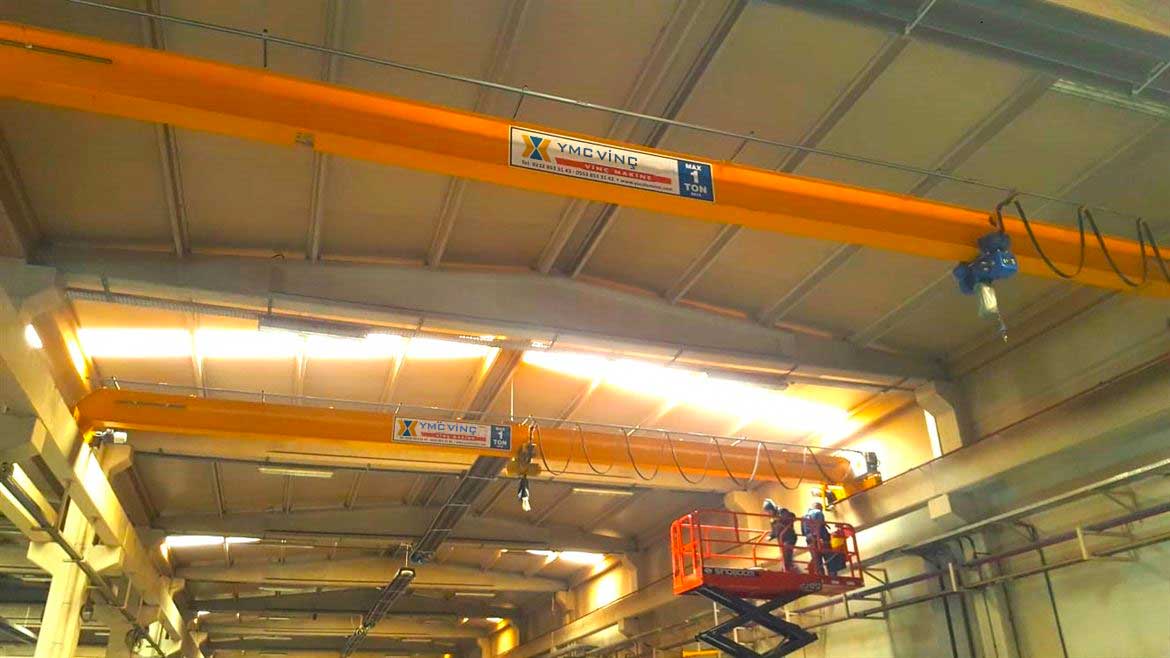
Single-girder, also known as monorail, and double-girder overhead cranesare two widely used industrial lifting systems. Understanding their differences helps identify the most suitable applications for each.
A monorail overhead crane has a hoist that travels along a single rail. This makes it suitable for light and medium load handling. It offers flexibility and can be used in confined spaces. Installation and maintenance are relatively straightforward, making it attractive for less intensive operations.
Double-girder overhead cranes, on the other hand, are larger and heavier and generally designed for heavier loads. Their trolley travels on two girders, enabling safe handling of substantial loads. They are generally more suitable for intensive, continuous use.
Understanding these differences helps you choose a solution that matches your workplace. Select a single-girder or double-girder overhead crane according to your operation's characteristics and requirements.
Overhead Crane Applications Across Industries
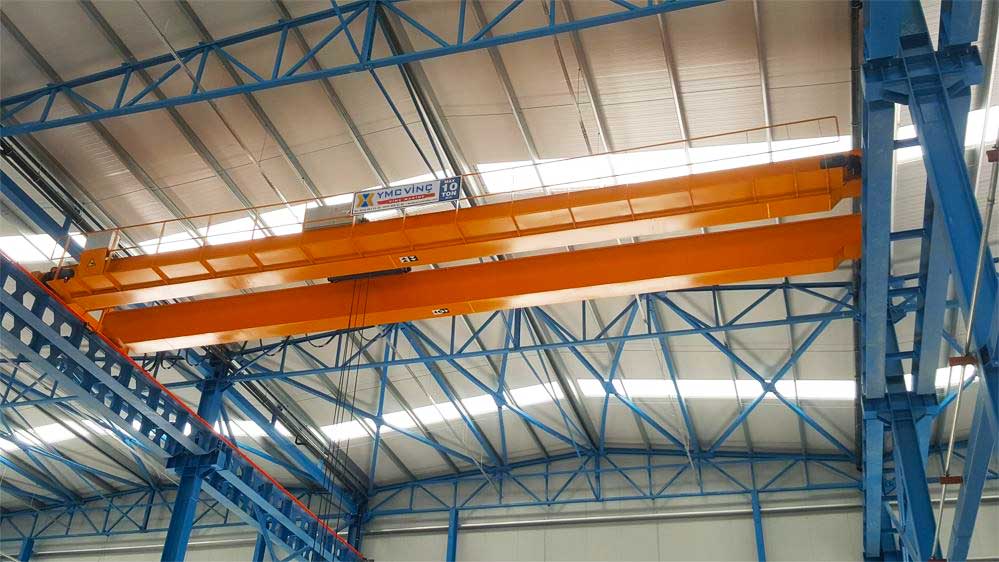
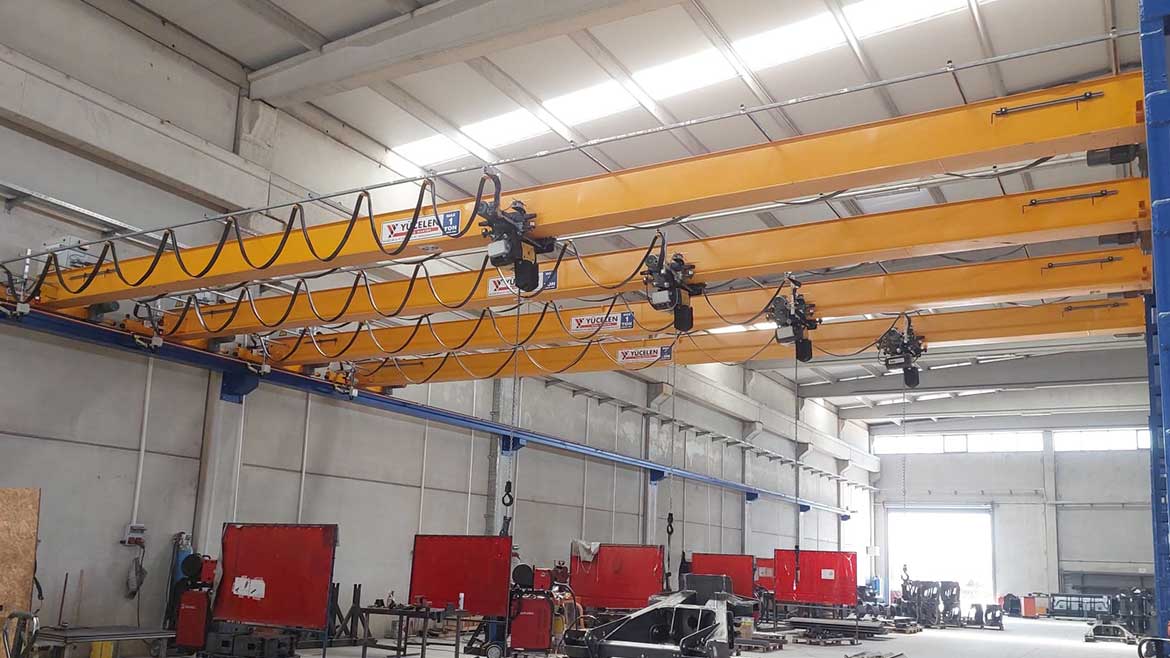
Overhead cranes are commonly used for moving and loading materials across large areas, helping a range of industries operate more efficiently.
For example, shipbuilders frequently use overhead cranes to move and position large steel plates. This improves occupational safety, speeds up processes and reduces costs.
Overhead cranes are also important in the automotive industry, where assembly lines need precise positioning of vehicle components. This supports production quality while saving time and costs.
Monorail Hoists
Monorail wire rope hoists provide an ideal solution for heavy industrial applications requiring high performance and efficiency. They combine durability, ease of use and excellent functionality…
Goods Lifts
Goods lifts serve many industries, including machinery manufacturing, metalworking, mould-making, chemicals, energy, marble processing, rolling mills, construction, foundries and shipyards…
Jib Cranes
Jib cranes are generally used in enclosed production areas to reduce the workload on overhead cranes. Manufactured to FEM and DIN standards, they offer a solution for confined workstations…
Gantry Cranes
Gantry cranes are effective, reliable equipment designed for load handling and stacking in large outdoor or indoor areas. These powerful machines carry bridge girders on portal legs…
Single-Girder Overhead Travelling Crane
Single-girder monorail overhead cranes are ideal for lifting and moving heavy loads. Their monorail configuration allows horizontal movement and efficient use even in confined spaces…
Double-Girder Overhead Travelling Crane
Double-girder overhead cranes make heavy-load handling easier in industrial and manufacturing facilities. Their durable construction and technological features improve productivity and operational safety…